
Building a Portable Wildfire Management Warehouse Inside a Shipping Container
In this project walkthrough, Channing McCorriston, The Container Guy, showcases a purpose-built 40-foot shipping container designed as a portable wildfire management warehouse for the Saskatchewan Public Safety Agency.
Originally launched in 2019, the project was developed in response to increasing wildfire activity across northern Saskatchewan. The goal was simple but ambitious: create a rugged, mobile storage system that could carry more equipment, deploy faster, and operate safer than traditional trailer-based setups.
The result is a fully modular container warehouse that now outperforms the 53-foot van trailers previously used for firefighting logistics.
Designing for Capacity and Flexibility
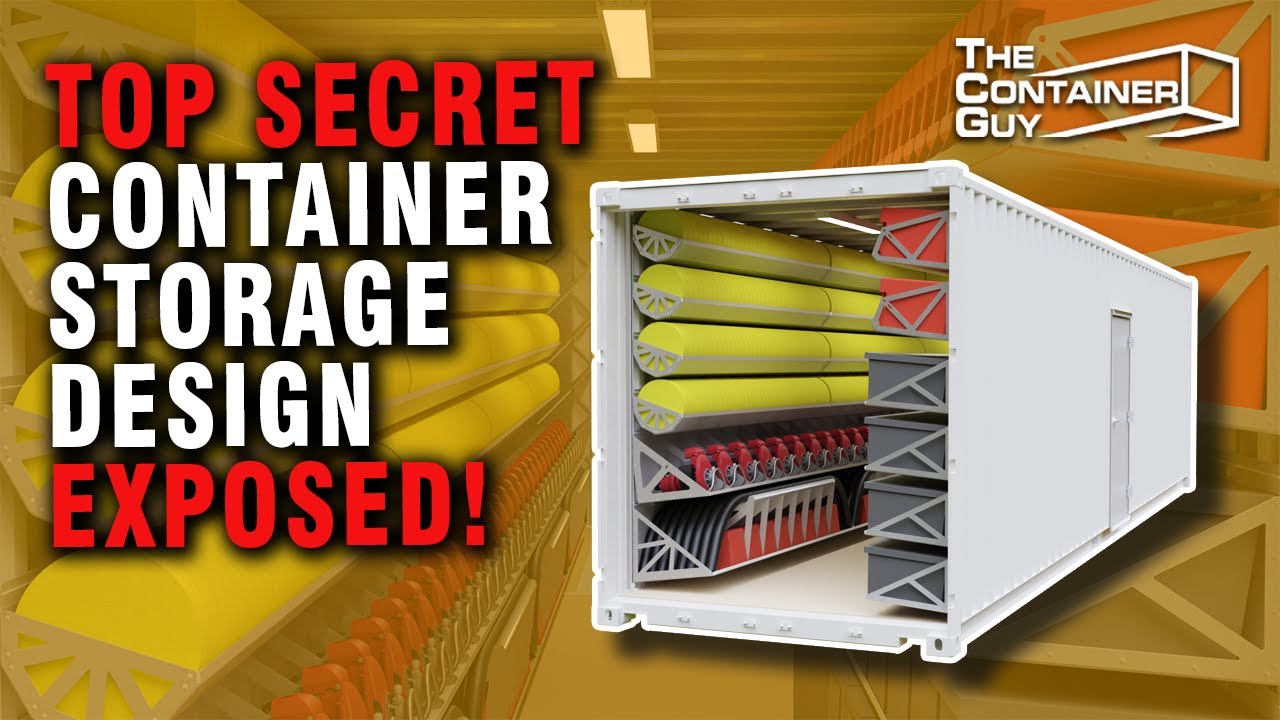
Using extensive 3D modeling and modular interior strut systems, the team managed to fit more equipment into a single 40-foot container than had previously been stored in larger trailers.
Adjustable shelving allows each unit to be customized based on regional firefighting strategies. Reinforced gusset brackets add strength while keeping everything modular, so layouts can be changed on site as needs evolve.
After two years of successful field testing, the Saskatchewan government issued a public tender for additional units, which Channing’s team was awarded.
Ground-Level Access Improves Safety
One of the biggest improvements over trailer systems is ground-level operation.
Firefighters no longer need to climb up into elevated trailers to access gear. Everything is reachable from the ground, reducing fall risk and speeding up loading and unloading during high-pressure deployments.
Because the container does not require tires, registration, or plating, transportation logistics are also simpler and more cost-effective.
Mounted on Refurbished Oil Field Skids
Each container is welded onto refurbished oil field-style skids that were cut down and modified for this application. The skids were repaired, straightened, reinforced, and painted before installation.
A three-foot grading section was added to the front for safer access, and winch points were integrated for easier positioning. The containers are welded directly to the skids, with careful attention paid to leveling and stability.
In some cases, beams were notched so the container corner castings could sit directly into the skid structure, creating a secure, low-profile foundation.
Packed with Critical Firefighting Equipment
Inside the container, every inch is optimized for storage and workflow. The system accommodates:
-
MK3 firefighting pumps
-
Hundreds of fire hoses in multiple sizes
-
Backpack pumps
-
Chainsaws and fuel cans
-
Toolboxes for individual firefighters
-
Sprinkler kits and suction hoses
-
High-flow fire extinguishers
-
Pulaski racks and hand tools
A custom workbench and multiple toolboxes support inventory management and on-site equipment repairs. Electrical power runs on a single circuit, feeding LED lighting down the center of the container and outlets at the workbench, creating a bright and functional workspace.
Shelving is bolted in using spring nuts, allowing components to be repositioned quickly without heavy tools.
Built for Real-World Deployment
These container warehouses have already proven themselves in remote and rugged locations, including northern communities like Buffalo Narrows.
The customer highlighted several advantages over traditional systems:
-
Faster deployment
-
Safer access to equipment
-
Easier transport
-
Higher storage density
-
Improved durability in rough terrain
The containers can be loaded from empty to fully operational in a short time, helping crews respond rapidly when wildfire conditions escalate.
Final Thoughts
This wildfire management container is a powerful example of how shipping containers can be adapted for critical emergency infrastructure.
By combining modular shelving, skid-mounted foundations, integrated electrical systems, and ground-level access, the design delivers a safer, more efficient way to support firefighting operations. The success of the initial deployment and follow-up orders confirms the value of this approach.
It also shows what is possible when container modification focuses on real-world use cases, durability, and flexibility.
As wildfire risks continue to grow, solutions like this portable warehouse will play an increasingly important role in emergency response across Canada and beyond.