
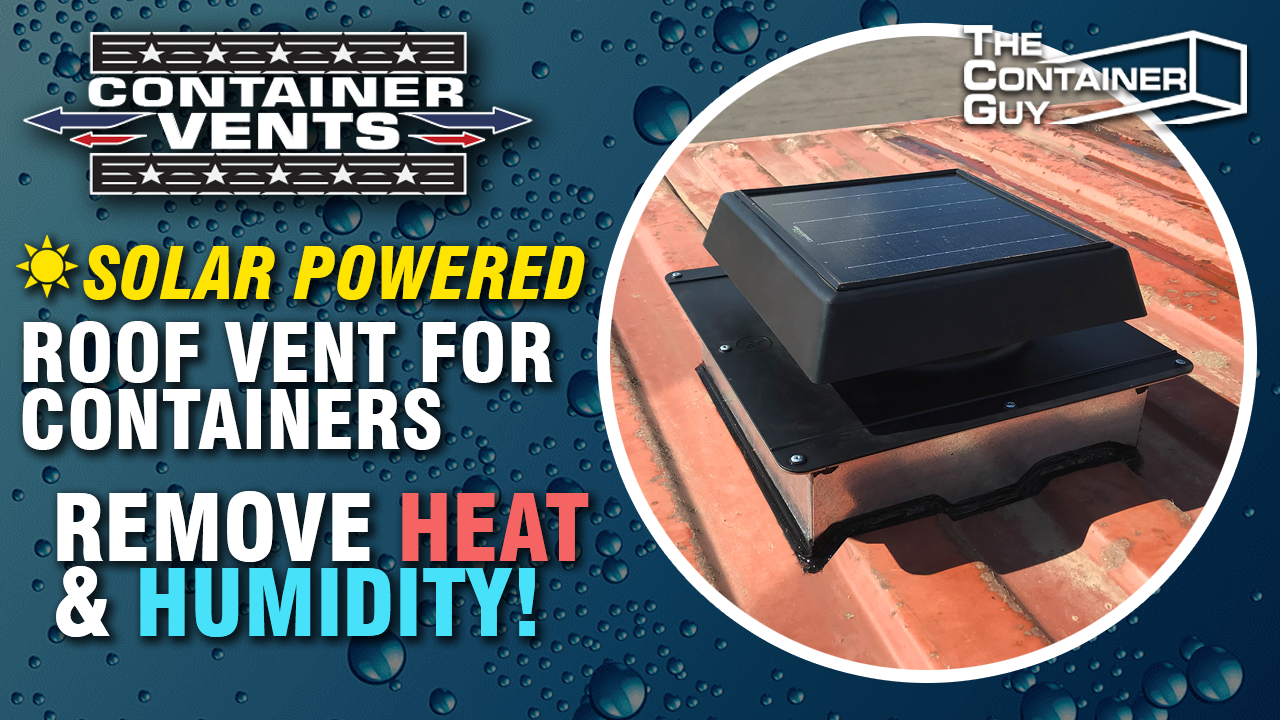
Channing and William install the Big Air 400 CFM Solar Roof Vent from Container Modification World. This solar-powered vent is specially adapted to fit the roof corrugations of a shipping container.
Installing a Solar Powered Roof Vent on a Shipping Container
Proper ventilation is critical when modifying a shipping container for storage, workshops, cabins, or industrial applications. In this walkthrough, Channing McCorriston, The Container Guy, demonstrates how to install a solar-powered roof vent designed specifically for container use.
This low-profile vent replaces traditional high-profile Whirlybird vents and offers improved durability, airflow, and weather resistance, especially important for containers that are transported or exposed to harsh climates.
Why Choose a Solar Powered Roof Vent?
Traditional turbine vents can be bulky and vulnerable during container transport. A solar-powered roof vent offers several key advantages:
-
Low profile design reduces risk of damage
-
Integrated solar panel and fan in one compact unit
-
No batteries required, eliminating cold weather failure issues
-
Weatherproof construction
-
Approximately 6 inches of snow clearance
-
High airflow capacity of 400 CFM
Because the fan runs directly off solar power, there are fewer mechanical components to fail over time. This makes it especially suitable for cold northern climates and hot regions alike.
How the Installation Works
1. Positioning the Vent
The vent frame acts as a template. Proper alignment with the container roof corrugations is essential. The vent must sit on the raised ridges rather than valleys to promote proper water runoff.
Avoid installing in dented areas or low spots where water may collect.
2. Cutting the Opening
Once aligned and marked, the roof opening is carefully cut. Precision matters here. Clean, straight cuts ensure proper sealing and fitment.
After cutting, all metal shavings must be removed immediately. Loose steel debris will rust quickly and can damage the paint surface. Use a broom, blower, or rag to thoroughly clean the area.
3. Sealing the Vent
Proper sealing is the most important step in preventing leaks.
-
Apply high quality polyurethane sealant along the raised corrugation ridges before fastening
-
Seal around every drilled hole
-
Fill small corner gaps and flange edges completely
-
Do not rely on basic caulking. Use outdoor rated sealants designed for UV exposure
Leaks are the most common failure point in roof modifications, and thorough sealing prevents future problems.
4. Fastening and Securing
The vent is secured using rivets. Pre-drilling helps maintain alignment and ensures a clean installation.
Due to manufacturing tolerances in containers, some holes may require slight adjustment. Take your time to maintain proper positioning throughout the fastening process.
Ventilation System Strategy
One roof vent alone can move significant air, but proper airflow requires intake and exhaust balance.
In the example shown:
-
Three roof vents were installed
-
Four intake vents were positioned lower on the container
Hot air exits from the top while cooler air enters from below, creating natural circulation. This setup dramatically reduces internal heat buildup.
This is especially useful for:
-
Tire storage in hot climates
-
Equipment storage
-
Workshops
-
Insulated containers prone to condensation
Built-In Features
The vent includes a stainless steel mesh filter installed inside to prevent insects from entering when the fan is off. The filter is removable for cleaning and maintenance.
Because the fan operates only when exposed to sunlight, airflow increases automatically during peak heat periods when ventilation is needed most.
Climate Performance
These vents perform well in extreme environments:
-
Snow melts quickly off metal container roofs due to solar heat absorption
-
Even in temperatures around minus 20 degrees Celsius, solar exposure helps maintain roof surface warmth
-
In hot climates, the vent actively exhausts trapped heat that can damage stored materials
With no battery to degrade, the system avoids common cold weather reliability issues.
Transport and Security Considerations
The solar panel component should be protected during transport. Secure it properly with shrink wrap or protective covering to prevent theft or damage before installation at the final site.
Final Thoughts
A solar-powered roof vent offers a clean, efficient, and durable ventilation solution for shipping containers. When installed properly, aligned on ridges, sealed thoroughly, and paired with adequate intake vents, it significantly improves airflow and interior conditions.
For container owners looking to prevent heat buildup, reduce condensation, and improve usability, this low-profile solar vent system is a smart upgrade over traditional turbine vents.
Proper installation makes all the difference.