
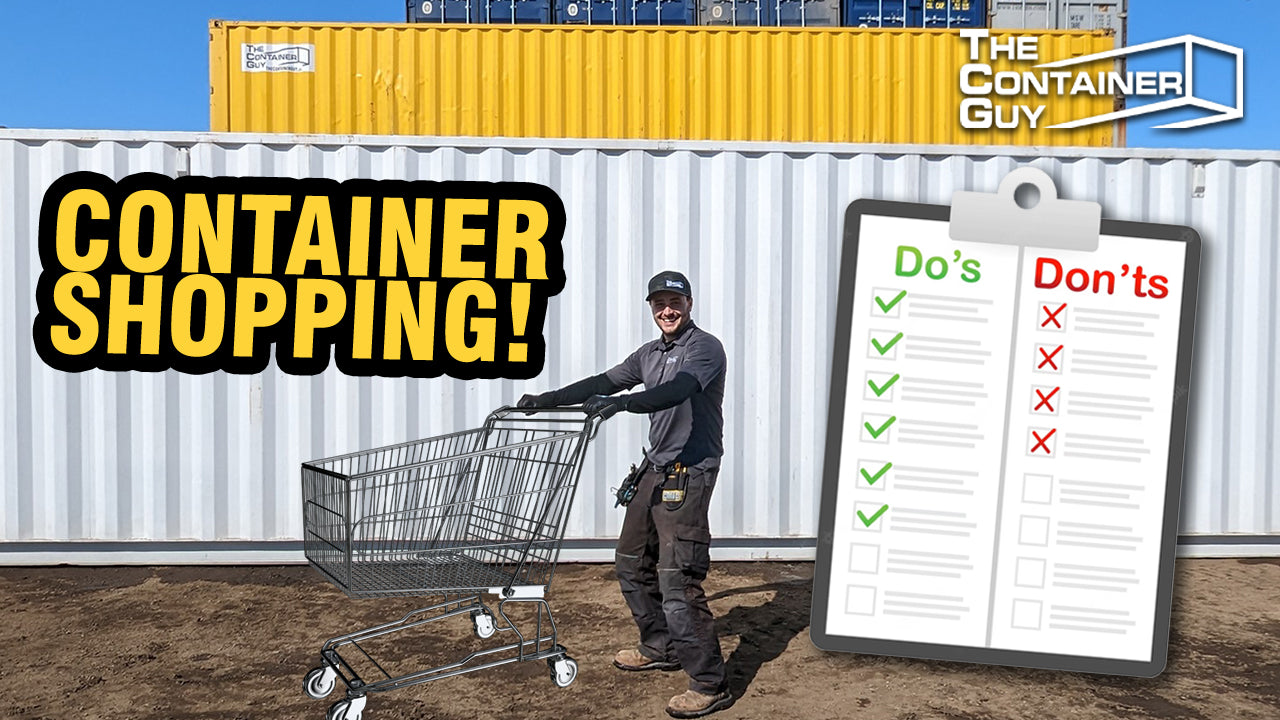
In this week's video, Channing will take you around our Container Yard to show you what to look for, and what to avoid while looking to buy or rent a shipping container!
Buying or Renting a Shipping Container What You Need to Know
Channing McCorriston, The Container Guy, walks through everything you need to know before buying or renting a shipping container. This includes delivery logistics, container types, pricing differences, condition expectations, and how to avoid common scams.
Whether you are purchasing for storage, job site use, or modification, understanding these details will save you money and frustration.
Container Sizes and Delivery Overview
The two most common container sizes are:
-
20'
-
40'
Delivery methods vary depending on size.
For residential and smaller placements, a deck truck with a tilt bed is commonly used. The bed tilts and the truck drives forward, gently placing the container.
For 40, 45, and 53-foot containers, a self-unloading trailer pulled by a semi is typically used. These require larger turning space and are better suited for commercial, industrial, or farm sites.
Important delivery considerations:
-
You must specify door orientation before delivery
-
Adequate space is required for tilt and maneuvering
-
Containers are extremely heavy and can damage concrete or stamped driveways
-
Blocking should be used to protect surfaces
Used vs One Time Use Containers
Used Containers
Used containers are the most budget-friendly option.
Common characteristics:
-
Dings and dents
-
Rust spots
-
Shipping line decals
-
Cosmetic imperfections
A 40-foot used container often provides the best value per square foot.
However, appearance may not be ideal for residential settings.
One-Time Use Containers
Often called new, these containers have made one overseas trip and are in excellent condition.
Advantages:
-
Clean interior
-
Minimal wear
-
Wind and water tight
-
Rodent proof
-
Dust free
The price difference between used and one-time-use 20-foot containers is often small once repairs and repainting are factored in.
These are the most popular residential option.
Double Door and Specialty Containers
Double Door Containers
Available primarily in 40-foot length.
-
Doors on both ends
-
Approximately $500 more than single door units
-
Extremely convenient for long containers
Side Door and Full Side Open Units
These specialty containers:
-
Allow forklift or Bobcat access
-
Have doors along the side
-
Are significantly more expensive
-
Ideal for commercial applications
Fork Pockets and Handling Differences
New 40-foot containers include fork pockets for lifting.
Used containers typically do not.
Improper lifting from the floorboards instead of corner castings can cause structural damage.
Correct equipment matters.
Quality Control and Why Local Matters
Buying locally offers major advantages:
-
Physical inspection before delivery
-
Door functionality checks
-
Welding and patching holes
-
Paint touch ups
-
Daylight testing for leaks
Remote sellers and online marketplace listings can be risky.
If pricing seems dramatically lower than market value, it is likely a scam.
Warning signs include:
-
Personal email addresses instead of company domains
-
Payment requests that do not match official company details
-
Sellers unwilling to verify business credentials
Always call the company directly and confirm legitimacy.
Interior and Structural Features of One Time Use Containers
One time use containers include:
-
Factory installed lock box
-
Waist height door handles
-
Strong 1 1/8" teak plywood floors
-
Load capacity up to 20,000 pounds per square foot
-
Multiple factory vents for improved airflow
These containers are forklift ready and suitable for clean storage, including furniture and mattresses.
Used Container Wear and Repairs
Used containers may have:
-
Bent doors
-
Cracked hinges
-
Worn seals
-
Holes from previous job site use
Repairs typically include:
-
Welding
-
Hole patching
-
Repainting
-
Seal replacement
For minor pinholes, rivets combined with interior sealant are often recommended instead of welding to preserve paint quality.
Even heavily dented containers can remain fully functional and cost-effective.
Rental Containers
Rental units provided are typically in one-time-use condition.
This ensures customers receive clean, secure containers rather than heavily damaged units.
Damaged containers are not sent out for rental.
Door Functionality
Door alignment varies, especially on used containers.
Proper reconditioning ensures:
-
Doors seal correctly
-
Lock rods function smoothly
-
Handles operate properly
Waist height handles on new containers provide easier leverage compared to older designs.
Key Takeaways from The Container Guy
-
40 foot used containers offer strong value per square foot
-
One time use containers provide cleaner appearance and better resale value
-
Always verify seller legitimacy
-
Delivery space planning is critical
-
Door orientation must be confirmed before delivery
-
Local quality control prevents surprises
Quick Comparison Overview
| Container Type | Best For | Condition | Cost Level |
|---|---|---|---|
| Used 20 ft | Budget storage | Cosmetic wear | Lowest |
| Used 40 ft | Maximum value | Cosmetic wear | Low |
| One Time Use 20 ft | Residential storage | Clean and sealed | Moderate |
| One Time Use 40 ft | Commercial and residential | Clean and sealed | Moderate |
| Double Door | Easy access | New or used | Slight premium |
| Side Door | Forklift access | Specialty | Higher |