
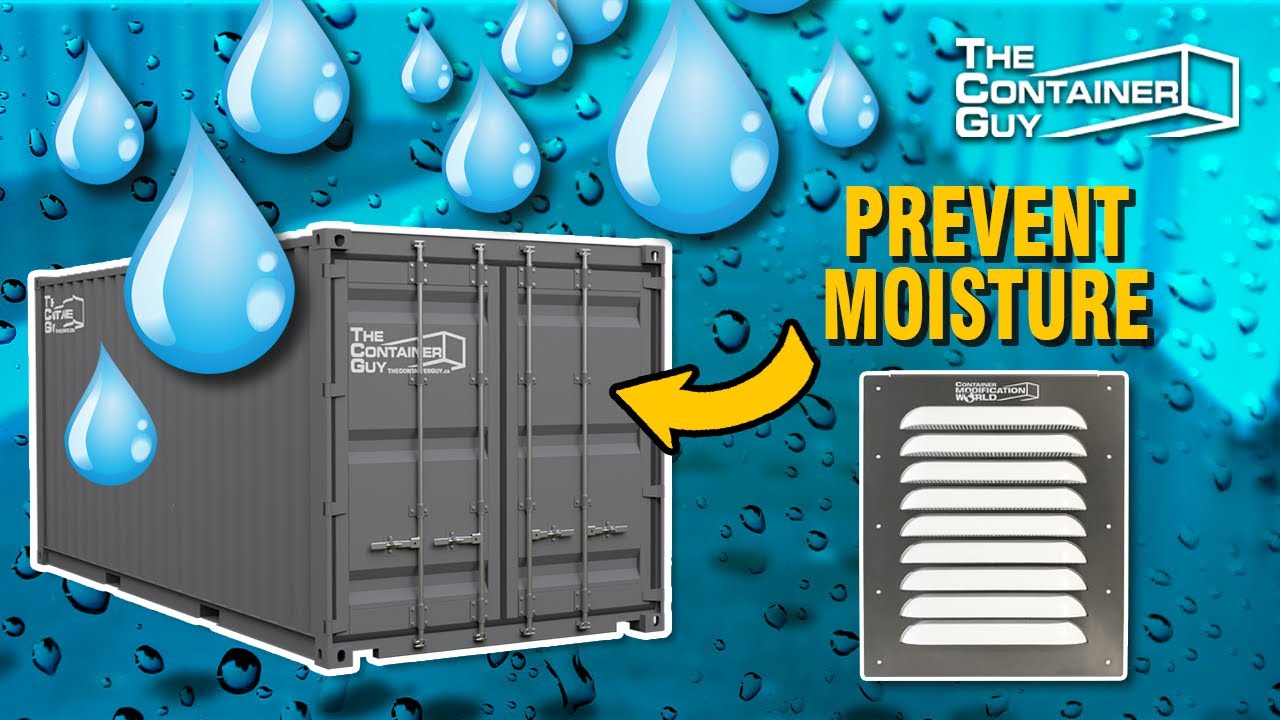
Why Shipping Containers Sweat and How to Stop It
In this walkthrough, Channing McCorriston, The Container Guy, explains why condensation forms inside storage containers and what you can do to prevent it.
If you have ever opened a container and found water droplets on the ceiling or damp cardboard boxes, you have experienced the effects of temperature-driven condensation.
Understanding why it happens is the first step to stopping it.
What Causes Condensation in Storage Containers
Condensation inside a shipping container is almost always caused by temperature fluctuations between day and night.
In the example discussed, outside temperatures were hovering around 4°C, with nights dropping below freezing and daytime temperatures climbing above freezing. These swings create the perfect conditions for moisture buildup.
Here is what happens:
-
During the day, warmer air holds more moisture.
-
At night, the metal container cools quickly.
-
The interior air temperature drops.
-
Moisture in the air condenses on the cold steel surfaces.
The roof is especially prone to this effect because metal corrugations cool rapidly. As water forms on the surface, it begins to pool and eventually drip down onto whatever is stored inside.
Why This Is a Problem
Containers are often used to store materials that are highly sensitive to moisture. Cardboard boxes are one of the most common casualties.
When condensation forms on the ceiling and drips down, cardboard absorbs that moisture. Over time, boxes weaken, collapse, and ruin the contents inside. Even tools and equipment can develop rust if moisture persists.
Without ventilation, the interior temperature of a container can swing dramatically. It is not uncommon for the inside to reach 20°C during the day and then drop to -10°C overnight in certain climates. These extreme shifts intensify condensation.
The bigger the temperature difference, the more moisture you will see.
The Science Behind It
Condensation is not a defect in the container. It is physics.
When warm air meets a cold surface, the air loses its ability to hold moisture. That moisture turns into liquid water on the surface of the steel.
The key factors are:
-
Temperature fluctuation between day and night
-
Rapid cooling of metal surfaces
-
Moisture trapped inside the container
-
Lack of airflow
If you remove airflow from the equation, you trap warm, moist air inside a steel box that cools rapidly at night.
The result is water.
The Solution: Ventilation
The most effective way to reduce condensation inside a storage container is ventilation.
Installing air vents, such as our BigAir® 45 passive vents, allows continuous air exchange between the inside and outside of the container. The goal is to keep the interior air temperature as close as possible to the exterior temperature.
When inside and outside air remain similar, the dramatic temperature swings that cause condensation are minimized.
Proper ventilation helps:
-
Reduce interior temperature spikes during the day
-
Prevent sharp drops at night
-
Lower moisture accumulation on metal surfaces
-
Protect stored goods from water damage
While specific vent sizes and types may vary depending on climate and use case, the principle remains the same. Moving air is essential.
Final Thoughts
Condensation inside shipping containers is common, especially in climates with significant day and night temperature changes. The metal structure cools quickly, moisture condenses, and water drips onto stored items.
The good news is that this issue is preventable.
By installing proper ventilation and allowing air to circulate freely, you can reduce temperature differentials and protect your belongings from moisture damage.
If you are using a container for storage, especially for cardboard boxes or moisture-sensitive materials, ventilation is not optional. It is a critical part of protecting what you store inside.