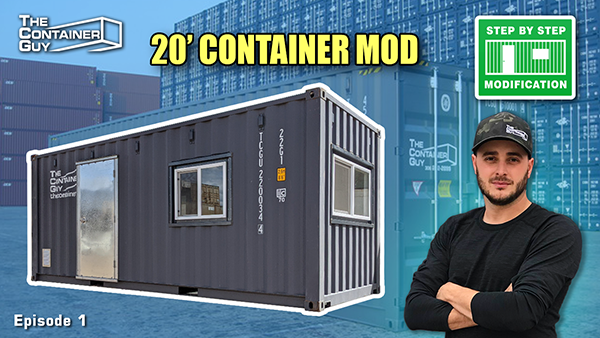
20-Foot Shipping Container Modification and Spray Foam Insulation Build
Channing McCorriston, The Container Guy, walks through the full modification process of a 20-foot one-time-use shipping container built for a customer. This project includes multiple window installations, a man door, interior strut lining, flashing kits, passive ventilation, and full spray foam insulation.
The result is a highly functional, weather-resistant, and modular container interior built with precision and long-term durability in mind.
Planning and Layout
Every project starts with layout planning. Customers design their container using an online planning tool that allows precise placement of windows and doors before fabrication begins. Proper planning ensures that openings align with the container’s corrugation pattern and structural elements.
Check out our 2D and 3D container planning tool here:
Installed Features in This Build
This 20-foot container includes:
-
One man door
-
Two sidewall windows
-
One 60" x 30" end wall window
-
Interior strut channel system
-
Container door flashing kit
-
Wall flashing kit
-
Big Air 45 passive vents with bug screens
Each component is selected and positioned based on corrugation alignment and structural considerations.
Window and Door Installation
Corrugation-Based Positioning
Window and door frame kits depend entirely on the container’s corrugation pattern. Openings must be centered between two outside corrugations.
Windows and doors can be positioned every 11 inches (278 mm), giving flexibility while maintaining structural integrity.
Sidewall corrugations differ from end walls, influencing window sizing:
-
Side walls typically accommodate 36-inch or 48-inch widths
-
End walls allow larger 40-inch or 60-inch options
In this build, a larger 60" x 30" window was installed on the end wall for increased light.
Cutting Openings
A corded angle grinder with a 6-inch cutting wheel is preferred for clean, controlled cuts. Plasma cutters and torches tend to produce rougher edges.
Careful marking is critical. Openings must be square and centered. D-rings embedded in the container walls require special attention during cutting to avoid structural compromise.
Sealing and Weatherproofing
A top bulb seal is installed against window and door headers to create approximately 40 to 50 percent compression.
Silicone is applied around frames and rivets to ensure a watertight seal. Although spray foam adds additional sealing, proper silicone application remains essential.
Man door threshold welds are ideally left intact for strength. If ground down, additional sealing solutions may be required.
Flashing Kits
Container Door Flashing Kit
This system:
-
Retains spray foam insulation
-
Preserves door operation
-
Avoids penetrating the container shell
-
Creates a clean edge for interior finishing
Self-tapping screws or rivets fasten the kit into hollow structural tubing rather than through the container.
Container Wall Flashing Kit
The wall flashing kit:
-
Retains spray foam inside cavities
-
Provides clean edges for plywood or drywall
-
Features slotted holes for adjustability
Both flashing kits prevent insulation from interfering with door function.
Strut Channel Interior System
CSM brackets and strut channel are installed along interior corrugations, typically every second corrugation.
This modular system allows:
-
Fold-down workbenches
-
Electrical conduit
-
Future modifications
Spring nuts slide into the strut, twist to lock, and create threaded attachment points without needing access behind the channel. The system provides strength and flexibility without reducing interior space.
Spray Foam Insulation
Preparation is critical.
All surfaces are taped and masked to prevent overspray. Foam is applied flush to vinyl window edges and door frames to create a full vapor barrier.
Approximately 2 inches of spray foam fills corrugation cavities, stopping flush with the strut channel edges.
Fork pockets are taped off during application. A galvanized patch solution is being developed to cleanly cover these areas after foaming.
The finished container interior acts like a giant cooler due to the complete vapor barrier and insulation system.
Doors and Handles
Thanks to flashing kits, spray foam does not interfere with door seals or cam locks. Doors operate smoothly after insulation.
Handles are positioned at waist height for ergonomic operation once the container is grounded.
Electrical Rough-In
Power is supplied through a waterproof exterior power-in plug using an extension cord.
A single circuit powers:
-
LED lighting
-
Outlets
-
Switches
Conduit is mounted to the strut channel, maintaining modularity and serviceability.
Key Takeaways
-
Precision cutting and alignment are critical due to corrugation patterns and embedded structural elements
-
Flashing kits combined with spray foam dramatically improve durability and thermal performance
-
The strut channel system creates a flexible modular interior framework
-
Thorough preparation before spraying foam improves insulation quality and finish
-
Professional attention to sealing, framing, and insulation ensures long-term container performance
This build demonstrates a mature, modular approach to container modification. Every system works together to create a durable, insulated, and highly adaptable space ready for long-term use.