
Installing 3/16-Inch Checker Plate Steel Flooring Over Wood in a Shipping Container
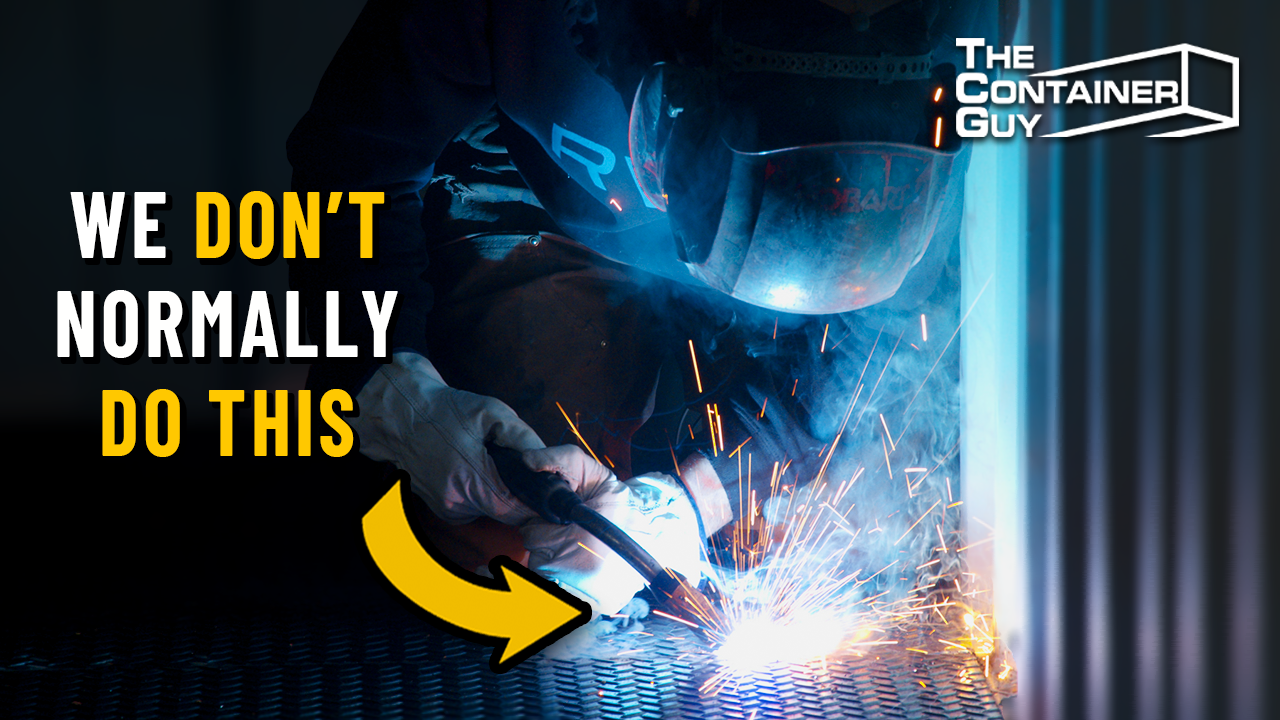
In this walkthrough, Channing McCorriston, The Container Guy, demonstrates a non-standard method of installing 3/16-inch checker plate steel flooring directly over an existing wood floor inside a shipping container.
This approach was driven by a customer request for a fully welded steel floor instead of the traditional wood surface. While effective, the process introduced important fire safety and material handling challenges that required careful planning.
Why This Method Is Different
The typical approach to installing steel flooring inside a container involves a cementitious substrate and steel channel framing. In this case, the checker plate was installed directly over the wood floor.
Because seam welding would occur on top of combustible material, fire risk became the primary concern.
Managing Fire Risk During Welding
Welding steel directly over wood presents a serious hazard. Heat can transfer through the steel and ignite the wood below.
To mitigate this risk, aluminum foil tape was applied to the wood floor wherever steel seams would be welded. The foil acts as a heat barrier, reflecting heat away from the wood substrate.
Careful handling was essential during sheet placement to prevent damaging the foil layer before welding began.
This precaution allowed seam welding to be completed while significantly reducing the risk of ignition.
Material Thickness Matters
The project used 3/16-inch checker plate steel.
This thickness is considered the minimum recommended when seam welding over a wood substrate. Thinner materials, such as 1/8-inch steel, are more prone to warping and flexing during welding, which can create a trampoline-like effect underfoot.
The added rigidity of 3/16-inch steel helps minimize distortion and provides a more stable finished surface.
Cutting and Edge Preparation
Steel sheets were cut to size using a plasma cutter. While efficient for large sheet cuts, plasma cutting leaves rough edges that require sanding to clean up.
For rough openings and detailed cuts, an angle grinder with a zip disc was preferred, as it produces cleaner edges and more precise results.
Edge preparation is critical for achieving clean seam welds and tight-fitting joints.
Sheet Placement and Seam Preparation
The steel sheets were carefully lifted and maneuvered into place due to their weight. Improper handling could damage the aluminum foil tape underneath or misalign the seams.
A half-inch overlap was left between sheets to create a proper lip for seam welding. This overlap ensures a strong weld joint and a clean, finished seam.
Because steel channels were not present beneath the floor for welding attachment, an alternative fastening method was required.
Fastening to Prevent Warping
To keep the steel sheets flat during welding, screws were countersunk directly into the wood floor.
This clamped the checker plate tightly to the substrate and reduced movement during seam welding. Controlling movement is critical to preventing distortion and maintaining a smooth finished floor.
Once the seams were welded, the floor structure was solid and unified across the entire container.
Finishing the Steel Floor
After welding was complete, the floor received a protective coating system.
The process included:
-
One coat of quick-dry primer
-
Two coats of black epoxy floor coating
The epoxy finish enhances durability, protects the steel from corrosion, and improves overall appearance. It also creates a surface that is easier to clean and maintain.
Key Considerations
This installation method demonstrates several important lessons:
-
Welding over wood requires deliberate fire prevention measures
-
Aluminum foil tape can act as an effective heat barrier when properly applied
-
Steel thickness directly affects warping and floor performance
-
Countersunk screws can substitute for channel framing when necessary
-
Proper finishing protects long-term durability
While not the standard method, installing checker plate directly over wood can be successful when executed carefully.
Final Thoughts
This project highlights a practical adaptation to meet a specific customer request while maintaining safety and structural integrity.
By combining heat shielding, proper material thickness, careful fastening, and protective coatings, the result is a fully welded steel floor that performs reliably inside a shipping container.
It serves as a reminder that unconventional approaches can work, provided fire safety, material behavior, and structural stability are carefully managed.